
Best Metal Mesh Screen Doors for Security and Bug Protection
Shopify APIMetal mesh screen doors serve two purposes that standard fiberglass screens can't: they keep insects out and they resist forced entry. Understanding which type of metal mesh does which job — and which you actually need — saves you from overspending on security hardware you don't need or underspending on mesh that won't last. If security isn't your priority and you just want a durable bug screen, compare the full range in our guide to the best magnetic screen doors of 2026.
Before choosing mesh material, confirm the opening size. Standard replacement screens assume a standard frame, but many older or custom doors are slightly off-size. If your goal is better bug protection rather than forced-entry resistance, start with the measuring guide so the screen can seal the frame instead of leaving edge gaps.
Types of Metal Mesh for Screen Doors
Aluminum Screen Mesh
Standard aluminum mesh is the most common metal option. It's made from lightweight woven aluminum wire, typically 18×16 mesh count (the same as fiberglass). It's more durable than fiberglass under pet scratches and normal wear, and it doesn't discolour the way fiberglass can.
What it doesn't do: provide security. Standard aluminum mesh is thin gauge wire that can be cut or pushed through with minimal force. It's a bug screen, not a security screen.
Best for: Replacing damaged fiberglass mesh, pet households, humid/coastal environments where fiberglass degrades faster.
Steel Security Mesh
True security screen mesh uses heavy-gauge stainless steel or powdercoated steel woven in a tight pattern. It's designed to resist cutting, kicking, and impact. Security screen doors rated to Australian Standard AS 5039 use this mesh in reinforced frames.
The appearance is different from standard screen mesh — the pattern is finer and the mesh sits in a heavy frame. It won't pass unnoticed.
Best for: Front entry doors, ground-floor windows, properties in higher-crime areas, anyone who wants insect protection and genuine security in one product.
Stainless Steel Fine Mesh (Non-Security)
Some manufacturers offer fine-gauge stainless steel mesh that's more durable than aluminum but not rated as a security product. It resists corrosion well, making it popular in coastal and humid environments. Better than aluminum for longevity, not a substitute for security mesh.
Best for: Coastal homes, high-humidity environments, anyone wanting a longer-lasting standard screen.
Metal Mesh Types at a Glance
| Mesh | Gauge / build | Corrosion resistance | Security | Relative cost | Best for |
|---|---|---|---|---|---|
| Aluminum | Light woven wire, 18×16 | Good (can oxidise/pit on coast) | None | $ | Durable bug screen, pet scratch resistance |
| Stainless steel (fine) | Fine woven wire | Excellent | Low | $$ | Coastal/humid homes wanting longevity |
| Bronze / copper | Woven, heavier | Excellent (patinas) | Low | $$$ | Historic homes, appearance-driven |
| Steel security mesh | Heavy-gauge, tight weave, framed | Powder-coated or stainless | High (AS 5039 class) | $$$$ | Forced-entry resistance + insects |
The jump from a bug screen to a security screen isn't a matter of degree — steel security mesh is a different product in a reinforced frame, which is why it costs several times more and needs professional installation. Match the mesh to the actual job: durability, corrosion resistance, or genuine security.
Replacement Metal Screen Mesh: Buying It by the Roll
If you have a framed screen door and just want to swap worn fiberglass for something tougher, you don't need a whole new door — you need replacement metal mesh by the roll.
Standard roll widths. Metal screen cloth comes in 24", 30", 36", and 48" widths, cut to length. Measure your frame opening and add about 2 inches on each side for handling and spline seating.
Mesh count. For insect protection, 18×16 (eighteen wires per inch one way, sixteen the other) is the residential standard — the same count as fiberglass. A tighter count blocks smaller insects but reduces airflow.
Match the spline. Metal mesh often needs a slightly larger spline than fiberglass because the wire adds thickness in the groove. If you reuse the old spline and it feels loose, step up one size (splines are sold by diameter in 1/64" increments).
Aluminum vs stainless by the roll. Aluminum is cheaper, easy to cut, and fine inland. Stainless costs more but won't pit in coastal salt air. Both install the same way.
The re-meshing process is the same spline-and-roller method used for any screen — remove the old spline, lay the new mesh slightly oversized, roll fresh spline into the groove, trim the excess. Our step-by-step guide on how to replace screen door mesh covers it in full; metal mesh just needs a firmer hand to keep it flat and a fresh utility blade for the trim.
Best Metal Mesh Screen Door Options
Crimsafe — Best Security Screen Door
Crimsafe is a recognised brand in security screen doors. Their Tensile-Tuff 304 grade stainless steel mesh is designed for resistance against cutting, impact, and forced-entry attempts. Doors are custom-made in a reinforced aluminium frame with screw-clamp mesh retention — not stapled or crimped like standard screens.
Available in Australia, US, and UK markets through dealer networks. Professional installation required. Expect $800–2,500+ installed depending on door size.
Best for: Maximum security combined with insect protection. Front entry doors, sliding glass door replacements.
Amplimesh — Best Mid-Range Security Screen
Amplimesh uses a rigid aluminium diamond grille pattern — different in appearance from woven mesh. Available through hardware retailers in Australia and some US markets. Provides good impact resistance at a lower price than Crimsafe. Less effective against knife attacks than Crimsafe's woven mesh but significantly more resistant to entry than standard screens.
Best for: Moderate security requirements, budget-conscious homeowners who want more than standard mesh.
Phifer Aluminum Screen Mesh — Best Standard Aluminum
For replacing damaged mesh on existing screen door frames, Phifer's aluminum screen cloth is the standard reference product. Available in rolls from most hardware stores, easy to DIY install. Not a security product — a quality aluminum bug screen for standard doors.
Best for: DIY mesh replacement, pet-resistant upgrades from fiberglass, general durability improvement. (Want to block the view as well as bugs? See screen door privacy mesh options.)
CoverWith Fiberglass Magnetic Screen — Best for Combined Flexibility
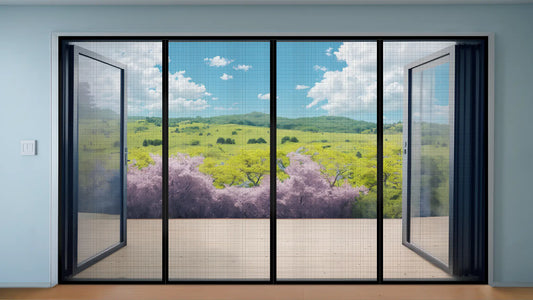
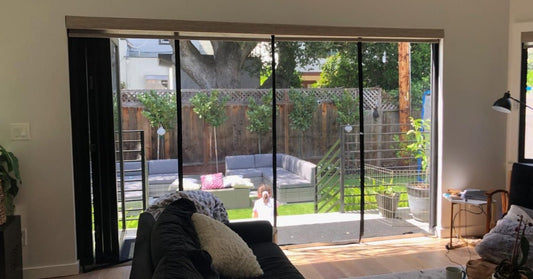
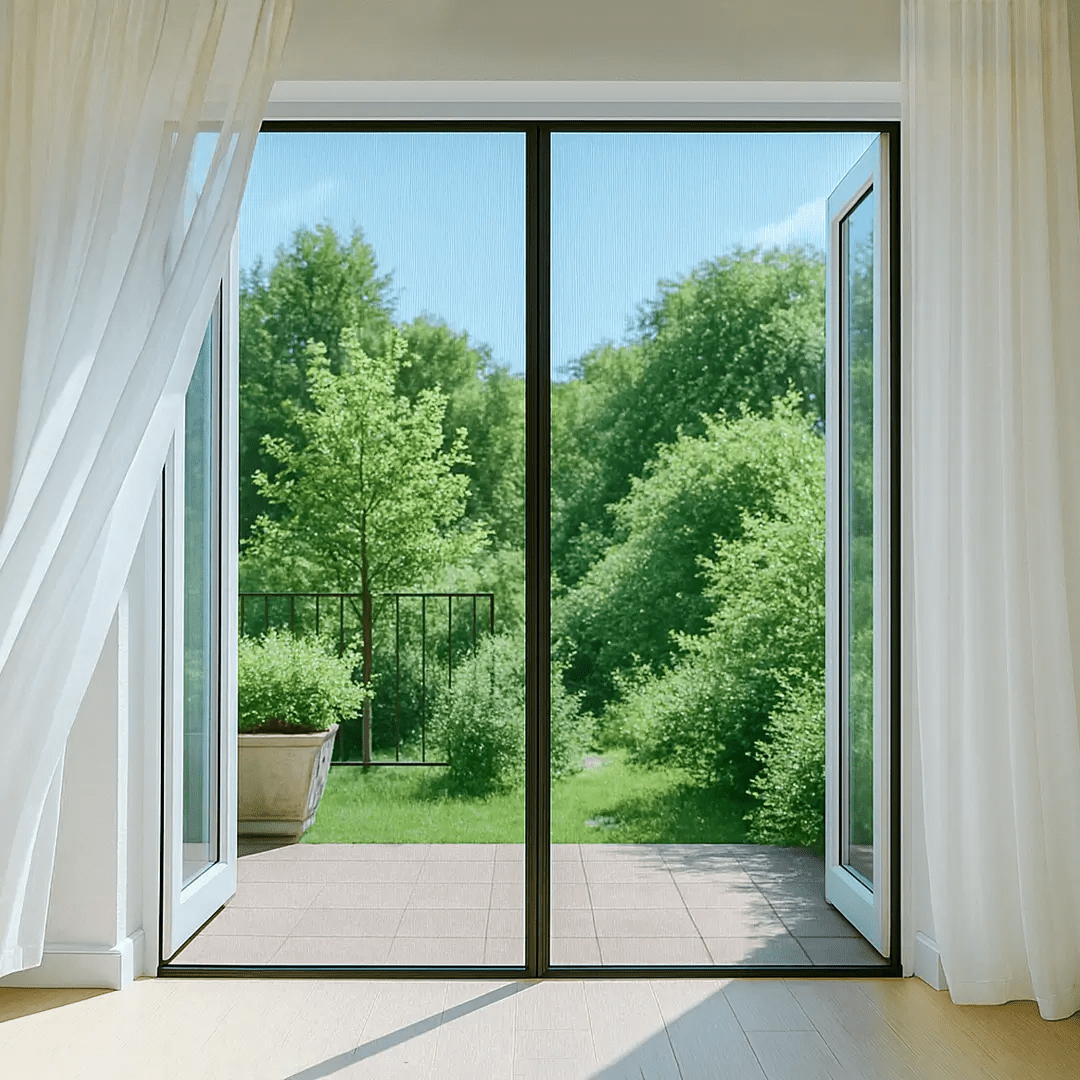
CoverWith's custom-fit magnetic screens use fiberglass mesh rather than metal, but they're worth mentioning in this context: for the large number of people searching for metal mesh because they want a longer-lasting screen (not specifically security), a fiberglass magnetic screen made to exact door dimensions often solves the real problem. The custom fit eliminates the edge gaps that make standard screens feel flimsy and ineffective.
Best for: Anyone who wants a better-performing screen without the cost of a security installation.
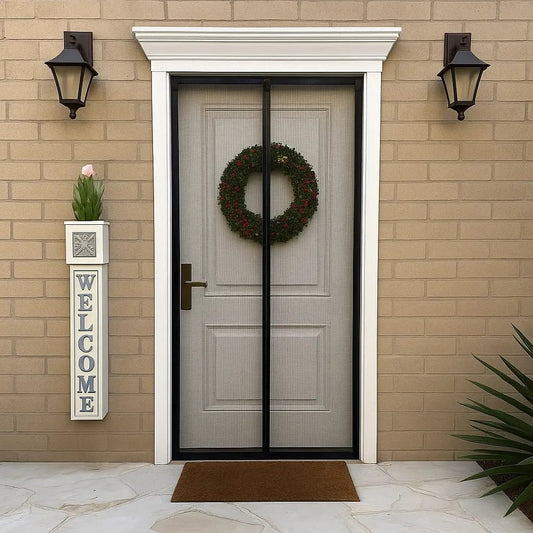
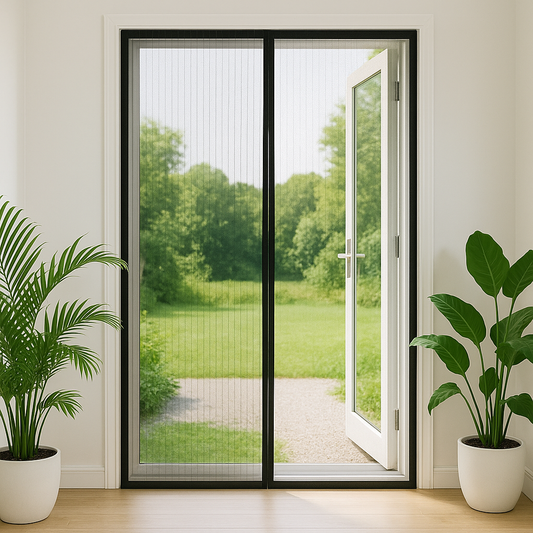
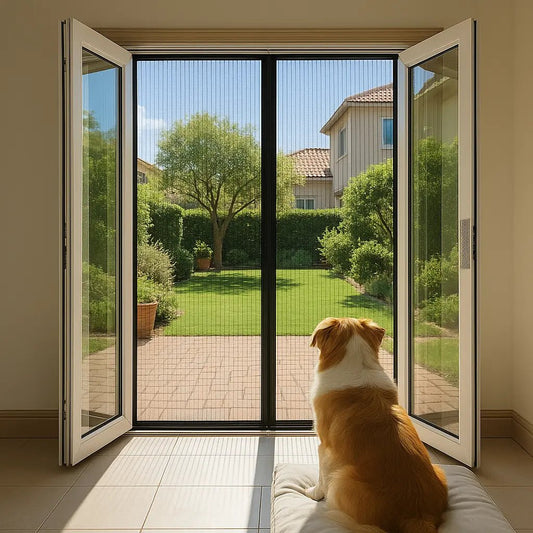
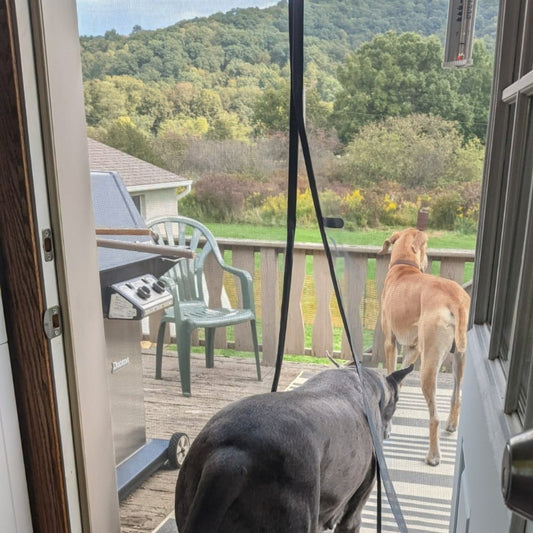
If you do not need a security-rated metal door, choose a custom magnetic screen for a measured fit and a cleaner seal around the frame.
For non-standard frames, measure the door frame width and height before choosing a product. CoverWith custom-size magnetic screens are made to order, which helps avoid the side and bottom gaps that make a bug screen feel ineffective.
Security Screen vs Standard Screen: What You're Actually Paying For
| Standard Mesh | Security Screen Mesh | |
|---|---|---|
| Material | Fiberglass or light aluminum | Heavy-gauge stainless steel |
| Security rating | None | AS 5039 or equivalent |
| Cost | $20–50 (magnetic) | $800–2,500 installed |
| Installation | DIY | Professional |
| Appearance | Light, nearly invisible | Visible mesh/grille pattern |
| Insect protection | Yes | Yes |
The gap in price is significant because security screens are fundamentally different products — not just stronger versions of standard mesh. If you only need insect protection, a security screen is significant overkill. If you need both insect protection and genuine forced-entry resistance, there's no alternative.
FAQ
What is the best metal mesh for a screen door? For general use and durability, Phifer aluminum mesh is the standard reference. For security, Crimsafe's 304 stainless steel tensile mesh is the strongest option available.
Is metal mesh better than fiberglass for screen doors? Aluminum mesh is more scratch-resistant and longer-lasting than fiberglass. However, it's heavier and can oxidise in coastal environments. For standard bug protection, both materials work well — fiberglass is easier to work with for DIY repairs.
What is a security mesh screen door? A security screen door uses heavy-gauge stainless steel mesh in a reinforced frame, designed to resist cutting, kicking, and impact. They're significantly more expensive than standard screens but provide forced-entry resistance alongside insect protection.
Can I replace standard screen mesh with metal mesh? Yes, if the frame can accommodate the weight. Phifer aluminum mesh is easy to install and available at hardware stores. Security mesh requires a purpose-built security frame — you can't retrofit it into a standard door frame. Our step-by-step guide on how to replace screen door mesh covers the spline-and-roller method for metal mesh.
How much does a metal mesh security screen door cost? Basic aluminum screen doors start around $100–200. Security screen doors from brands like Crimsafe or Amplimesh run $800–2,500+ installed, depending on size and specification.
Can you buy metal screen mesh by the roll? Yes. Aluminum and stainless screen cloth are sold in rolls (common widths 24"–48") at most hardware stores and online, cut to length. Buy a few inches wider than your frame opening so you have material to seat in the spline groove and trim.
What size spline do I need for metal screen mesh? Metal mesh usually needs the same or a slightly larger spline than fiberglass, because the wire adds thickness in the groove. If you're reusing the frame, take the old spline to the store to match diameter, or step up one size (1/64") if the mesh feels loose when seated.
Final Verdict
For straightforward durability and insect protection, Phifer aluminum mesh is the practical upgrade from fiberglass — use it for DIY mesh replacement or ask for it when getting a new standard screen. For genuine security alongside insect protection, Crimsafe is the gold standard, with the installed cost to match. Most people searching for "metal mesh screen door" actually want a more durable bug screen rather than a security product — in which case a quality fiberglass screen (or a custom-fit magnetic screen from CoverWith) does the job at a fraction of the cost.
Next step: If you are solving fit and bug gaps rather than security, measure your frame and compare the custom magnetic screen option before paying for a full metal security door.