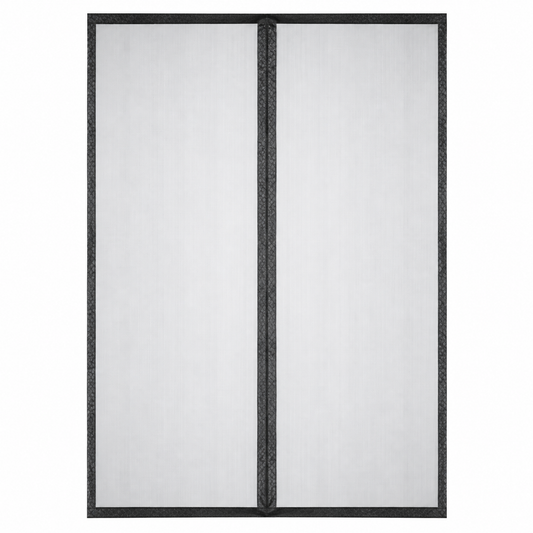

How to Replace Screen Door Mesh: A Simple DIY Guide
Shopify APIA torn or sagging screen door mesh is one of those small problems that gets annoying fast — bugs get in, the door looks shabby, and it only gets worse. The good news: replacing screen door mesh is a straightforward DIY job that most homeowners can finish in under an hour. Here's exactly how to do it.
What You'll Need
Before you start, gather your tools and materials. You won't need anything specialist — most of this is available at any hardware store.
Tools:
- Spline roller (the key tool — one end presses spline in, the other removes it)
- Flathead screwdriver
- Utility knife or sharp scissors
- Tape measure
- Clamps or binder clips (optional, helps hold mesh in place)
Materials:
- Replacement screen mesh (see fiberglass vs aluminum section below)
- Screen spline (the rubber cord that locks the mesh into the frame groove)
Tip: Bring your old spline to the hardware store to match the diameter — common sizes are 0.140", 0.160", and 0.175". Using the wrong size is the most common DIY mistake.
How to Replace Screen Door Mesh: Step-by-Step
Step 1 – Remove the Door
Lift the door off its hinges or track and lay it flat on a clean surface — a workbench, table, or even the floor works fine. Working flat gives you control and prevents the mesh from shifting.
Step 2 – Take Out the Old Spline
Use the concave end of the spline roller (or a flathead screwdriver) to pry up one corner of the rubber spline. Pull it out of the groove all the way around. The old mesh will come loose once the spline is out — discard both.
Clean out the groove with a dry cloth. Any debris left in there can prevent the new spline from sitting flush.
Step 3 – Cut the New Mesh to Size
Roll out your new mesh over the frame and cut it roughly 2–3 inches larger than the frame on all sides. You'll trim the excess at the end — cutting too small now means starting over.
If the mesh has a grain (fiberglass especially), align it straight with the frame before you start. Crooked mesh looks bad and is hard to fix once the spline is in.
Step 4 – Press In the New Spline
Starting at one corner, lay the spline over the mesh and use the convex wheel of the spline roller to press it firmly into the groove. Work one side at a time: press one long side fully before moving to the short sides.
Keep light tension on the mesh as you go — not so tight that it distorts, just taut enough to avoid wrinkles. Pull gently from the opposite side while rolling to keep things even.
Common mistake: Rolling too fast. Go slow and make sure the spline is fully seated in the groove before moving on.
Step 5 – Trim the Excess Mesh
Once all four sides are splined, run a utility knife along the outside edge of the spline groove to cut off the overhanging mesh. Use one clean pass — multiple strokes tend to fray fiberglass mesh.
Step 6 – Rehang the Door
Lift the door back onto its hinges or into the track, check that it opens and closes smoothly, and you're done.
Fiberglass vs Aluminum Mesh — Which Should You Use?
Choosing the right mesh material makes a real difference in how long your repair lasts.
| Fiberglass | Aluminum | |
|---|---|---|
| Cost | Lower (~$10–20 for a roll) | Slightly higher (~$15–25) |
| Durability | Good for normal use | Better for high-traffic or pet households |
| Flexibility | Soft, easy to work with | Stiffer, harder to handle |
| Rust risk | None | Can oxidize over time |
| Best for | Windows, low-traffic doors | Doors, pet areas, garages |
For most screen doors, fiberglass mesh is the practical choice — it's forgiving to work with and does the job well. If you have pets that push or scratch at the door, consider aluminum or a purpose-made pet-resistant mesh.
When Replacing Mesh Isn't Worth It
DIY mesh replacement works well when the frame is solid and the door dimensions are standard. But there are a few situations where patching the mesh creates more problems than it solves:
The frame is warped or damaged. If the aluminum or wooden frame is bent, the new mesh won't sit flat and you'll have gaps no matter how careful you are.
The door doesn't close properly. A screen door that doesn't hang right or seal at the edges will let in insects regardless of how good the mesh is.
Your door is a non-standard size. Sliding glass doors, French doors, and doorways with unusual dimensions often don't fit off-the-shelf screens. Forcing a standard mesh into an oversized frame leads to gaps at the edges — exactly what you're trying to avoid.
You want a magnetic closure. Traditional framed screen doors rely on a latch or spring hinge. If you want the convenience of a hands-free magnetic door — useful when your hands are full or you have pets and kids — a magnetic screen is a completely different product.
For non-standard openings or anyone who wants a guaranteed fit, CoverWith makes custom magnetic screen doors built to your exact door dimensions. Customers submit their measurements, and the screen is made to match — no edge gaps, no guesswork.
FAQ
How long does screen door mesh last? Fiberglass mesh typically lasts 5–10 years under normal conditions. UV exposure, pets, and heavy use will shorten that. Aluminum mesh tends to last longer but can corrode in humid or coastal environments.
Can I replace screen mesh without removing the door? Yes, for small repairs or if the door is difficult to remove. It's harder to keep the mesh taut and aligned, but it's doable for basic patch jobs. For a full replacement, removing the door gives much better results.
What size mesh do I need? Standard fiberglass screen mesh comes in 18×16 mesh count (18 strands per inch horizontally, 16 vertically) — this is what you'll find at most hardware stores and works for most doors. Pet-resistant mesh is typically 17×20 with thicker strands.
Is fiberglass or aluminum mesh better for pets? Neither standard fiberglass nor standard aluminum holds up well against determined pets. If pets are the reason you're replacing the mesh, consider pet-resistant fiberglass (thicker weave, usually sold as "pet screen") or look into a heavy-duty magnetic screen door designed specifically for pet households.
How much does it cost to replace screen door mesh yourself? A DIY replacement typically costs $15–35 in materials (mesh roll, spline, and spline roller if you don't own one). A professional screen repair service usually runs $50–100 depending on door size and your location.
Final Thoughts
Replacing screen door mesh is a satisfying DIY project — inexpensive, quick, and the results are immediately visible. For standard doors in good condition, it's almost always worth doing yourself.
That said, if your door opening is an unusual size, the frame is past its best, or you want the convenience of a magnetic screen, a custom solution often makes more sense than a repair. A screen that's made to fit your exact doorway — like those from CoverWith — eliminates the edge-gap problem entirely and tends to look cleaner than a DIY patch job on an aging frame.