
Best Magnetic Screen Door for Sliding Doors (2026 Guide)
Shopify APISliding glass doors are one of the trickiest openings to screen. They're wide, they're often non-standard in height, and most off-the-shelf magnetic screens simply weren't designed for them. This guide covers what actually works — and what to watch out for.
Why Sliding Doors Need a Different Approach
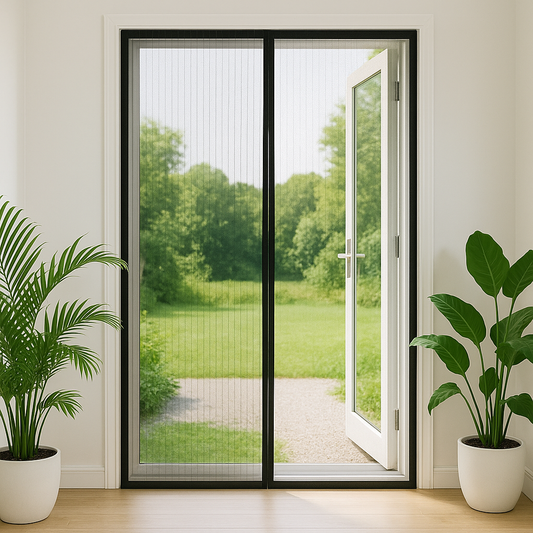
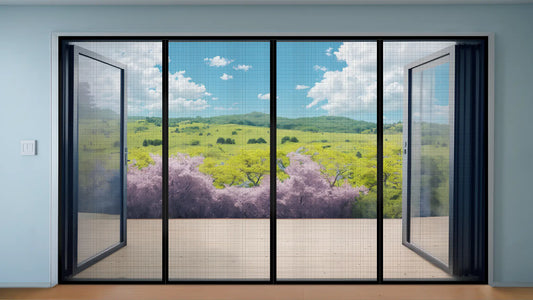
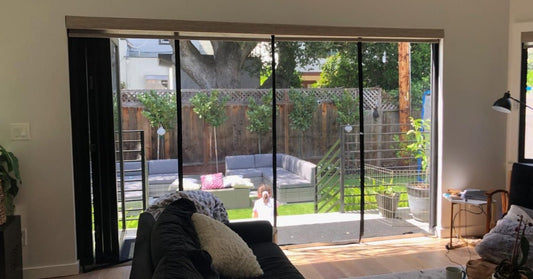
Most magnetic screen doors are designed for single standard doorways (around 36" × 80"). Sliding glass doors are typically 72" wide or wider, which means you either need two panels side by side or a single extra-wide screen.
The problem with two panels: you end up with a seam down the middle that gaps open, lets in bugs, and looks untidy. The problem with standard-width options on a wide opening: the edges don't reach the frame.
This is the core reason sliding door screens need more thought than a standard entry door.
What to Look for in a Magnetic Screen for Sliding Doors
Width coverage. Measure your opening exactly — width and height. Most sliding doors run 72"–80" wide and 80"–96" tall. Check that the screen's stated coverage matches your measurement, not just "fits most sliding doors."
Number of magnets and seam quality. For wide screens, the center closure matters most. Look for screens with magnets spaced no more than 4–5 inches apart along the seam, and a reinforced center strip to stop the panels from drifting apart.
Attachment system. Sliding door frames are often aluminum with limited surface for hook-and-loop tape. Make sure the screen uses a wide adhesive strip (at least 1") or a clip/tension system that grips properly.
Mesh material. Fiberglass mesh is standard and works well. If you have pets or children who push against the screen, look for a reinforced or heavy-duty mesh option.
Best Magnetic Screen Doors for Sliding Doors
CoverWith Custom Magnetic Screen — Best Overall for Sliding Doors
For sliding doors, CoverWith is the standout option. Customers submit their exact door dimensions — width, height, and frame depth — and receive a screen made precisely to those measurements. This eliminates the edge-gap problem entirely and handles non-standard sliding door sizes that no off-the-shelf product accommodates.
CoverWith uses fiberglass mesh with industrial-grade hook-and-loop attachment and magnets placed at close intervals along the center seam. The result closes reliably every time and seals fully at the edges.
Price varies by size. For a typical 72" × 80" sliding door opening, expect a higher price than Amazon options — but the fit guarantee makes it the right call for anyone who's already tried and returned two or three standard screens.
Best for: Non-standard sizes, French-style sliding doors, anyone who wants a clean look with no edge gaps.
Flux Phenom Reinforced — Best Budget Option
Flux Phenom's wider models cover up to 40" per panel, which means you'd use two side by side for a standard 72" sliding door. The polyester mesh is lightweight and the 26 magnets per panel close reliably. At around $20–25 per panel, it's an affordable entry point.
The trade-off: the center seam between two panels isn't sealed, so insects can slip through at that join. Acceptable for low-bug environments; less ideal if you're in a high-mosquito area.
Best for: Budget-conscious buyers with standard openings who can tolerate a small center gap.
Magzo Double Door Screen — Best for Standard Double Openings
Magzo makes a double-panel screen specifically designed for wider openings, with fiberglass mesh and a hasp latch on the center seam for wind resistance. The extra closure point helps the panels stay together better than magnet-only options.
Runs approximately $25–35 depending on size. Coverage tops out at around 72" wide, so measure carefully before ordering.
Best for: Standard 72" sliding openings, slightly windy locations.
How to Install a Magnetic Screen on a Sliding Door
Installation is similar to a standard door but with one extra consideration: the frame.
- Clean the frame. Hook-and-loop tape bonds poorly to dusty or greasy surfaces. Use isopropyl alcohol and let it dry fully before attaching anything.
- Attach the top strip first. Start at the top and work down the sides, keeping the screen taut as you go.
- Check for gaps at the bottom. Sliding door thresholds vary — some have a lip, some don't. If there's a gap at the floor, cut a small strip of the adhesive backing to bridge it.
- Test the closure. Walk through several times and confirm the magnets realign reliably in the center.
FAQ
Can you put a magnetic screen on a sliding glass door? Yes, but standard-width screens often don't cover the full opening. You'll need either a double-panel screen designed for wider openings or a custom-fit screen made to your exact dimensions.
What size magnetic screen do I need for a sliding door? Measure the width and height of the opening itself (not the door panel). Most sliding glass doors are 72"–80" wide and 80"–96" tall. Order a screen that matches those measurements exactly.
Do magnetic screens work on aluminum sliding door frames? Yes. The hook-and-loop adhesive sticks to aluminum frames well, provided the surface is clean and dry. Use isopropyl alcohol to prep the frame before attaching.
Will a magnetic screen door work on a patio sliding door? Yes — patio sliding doors are the most common application. Just confirm the screen width covers your full opening, not just the movable panel.
How do I stop the screen from billowing in the wind? Choose a screen with a hasp latch or weighted bottom hem. A custom-fit screen with a tight edge seal also reduces billowing because there's less slack fabric catching the breeze.
Final Verdict
For a standard 72" sliding door on a tight budget, Magzo or Flux Phenom will work. For anything non-standard, or if you've already had an off-the-shelf screen fail to fit properly, CoverWith's custom-made option is the reliable solution. The extra cost is offset by not buying and returning two or three screens that almost fit.